Academic Scholarships Explained
By Paul Dunstan – Managing Director, My Top Schools. Former Commercial Director, Aldenham School. 25+ years in the UK independent school sectorDiscover how academic scholarships work at UK independent schools, what assessment panels look for, typical fee reductions, and how to prepare over 12–18 months.
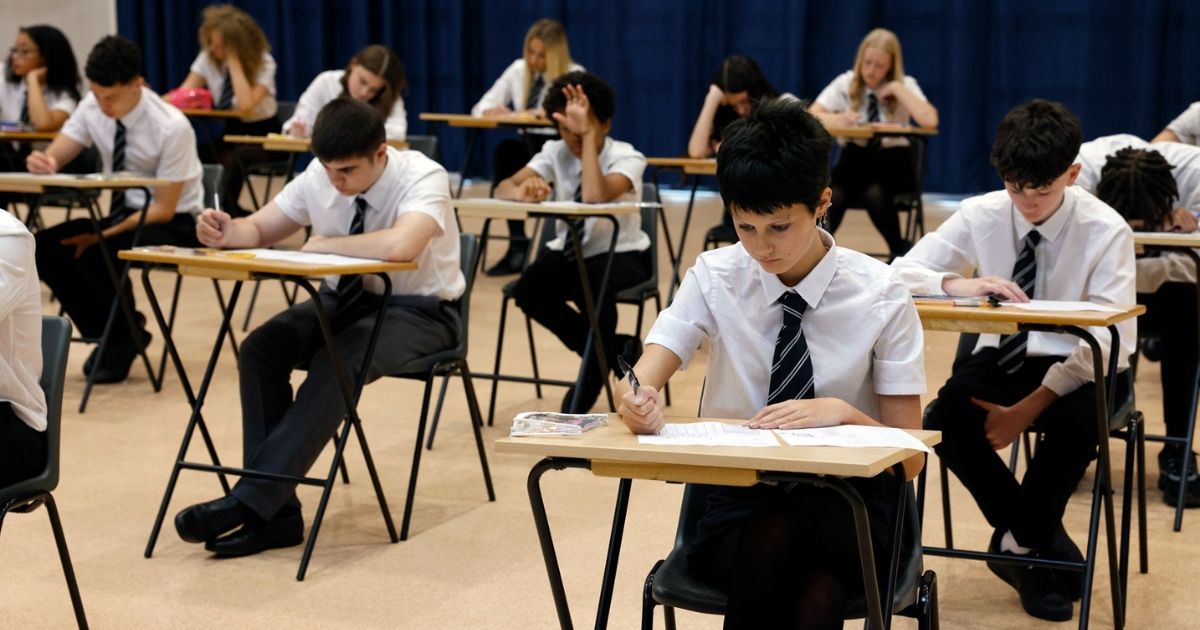
Academic scholarships at UK private schools are awarded to pupils who demonstrate exceptional academic ability, typically through entrance examinations, interviews and references. They usually reduce fees by 5 to 20 per cent, though a small number of high-value awards exist at particular schools. Assessment is competitive, and preparation over 12 to 18 months significantly improves the chance of success.
This is a supporting article within our pillar guide to bursaries and scholarships at UK private schools.
How academic scholarships work
Almost every UK private school offers academic scholarships at 11+, 13+ and 16+ entry points. Assessment typically involves:
- Written examinations — usually English, maths, and a reasoning or general paper.
- An academic interview with senior staff.
- A reference from the current headteacher or head of prep school.
- Sometimes a longer scholarship exam paper (typically 90 minutes) alongside the main entrance test.
The most academically selective schools use these exams to identify pupils who are outstanding within an already selective cohort. Standards vary between schools, but at top academic schools, scholarship level is often significantly above already-competitive entry level.
Typical value
| Type | Typical fee reduction |
|---|---|
| Standard academic scholarship | 5% – 20% |
| Major scholarship (top scholar) | 20% – 50% (limited) |
| Named / foundation academic award | Up to 100% (very rare) |
Some schools offer honorary scholarships that carry no fee reduction but confer status and enrichment opportunities. Many schools cap the maximum scholarship value at around 10 to 20 per cent, on the principle that scholarships recognise ability and bursaries address financial need.
What schools look for
Beyond raw exam performance, scholarship panels typically look for:
- Intellectual curiosity — genuine interest in ideas, not just test technique.
- Written expression — clear, well-argued writing under time pressure.
- Problem-solving — the ability to approach unfamiliar problems logically.
- Reading depth — evidence of independent reading beyond the school curriculum.
- Verbal reasoning — the ability to discuss ideas confidently in interview.
In interview, expect discussion of a text, a current issue, or a subject the child has expressed interest in. The panel is testing thinking, not testing knowledge.
How to prepare
Effective scholarship preparation typically runs over 12 to 18 months:
- Master the standard entrance paper first — scholarships are usually taken alongside or shortly after main entry papers.
- Build reading — literary fiction, non-fiction, quality journalism. Depth matters more than volume.
- Practise timed writing — clear paragraphs, developed arguments, tight conclusions.
- Work through past scholarship papers where the school publishes them.
- Practise interview questions in low-stakes settings — with parents, tutors, family friends.
- Encourage independent thinking — opinions on current issues, engagement with what the child reads.
Tutoring can help, but should not be over-relied on. Scholarship panels are experienced at spotting the difference between genuine ability and coaching.
When to apply
Academic scholarships are usually taken:
- At 11+ entry — in the January or February preceding September entry.
- At 13+ entry — typically taken at prep school, in the May of Year 8.
- At 16+ entry — in the November of Year 11 preceding sixth form entry.
Deadlines vary by school. Register at least 12 months in advance to be certain of the correct timeline.
Sixth form academic scholarships
Sixth form is a strong point for academic scholarships. Schools often use them to attract high-performing pupils from other schools into their sixth form. Many schools that offer only modest scholarships at 11+ and 13+ offer significantly more generous awards at 16+. If your child is a strong academic performer at GCSE, sixth form scholarships are worth serious consideration.
Combining with a bursary
Many schools allow academic scholarships to be combined with means-tested bursaries. A typical combination:
- Academic scholarship: 15% off fees.
- Means-tested bursary: 35% off fees.
- Combined award: 50% off fees.
The scholarship element recognises the child; the bursary element addresses affordability.
Final thought
Academic scholarships recognise genuine ability but rarely change affordability decisively on their own. For high-performing children they open doors — to specific schools, to enrichment programmes, and often to combined bursary awards. For families for whom affordability is a factor, prepare seriously and combine scholarship applications with bursary applications where the child is strong enough to compete.
My Top Schools helps parents find the right school for their child — with clear profiles, honest information, and search filters built around what really matters. Start your search.
Related reading
- Bursaries and scholarships at UK private schools — The full pillar guide.
- Sports scholarships at UK private schools — Sporting awards explained.
- Music, art and drama scholarships — Creative awards explained.
- How to apply for a private school bursary — The combined application picture.