The UK Private School Admissions Process: Step-by-Step
By Paul Dunstan – Managing Director, My Top Schools. Former Commercial Director, Aldenham School. 25+ years in the UK independent school sectorThe ultimate step-by-step master guide to navigating UK private school entry, detailing everything from shortlist strategy and open days to 11+/13+ entrance assessments, interviews, and offer acceptance timelines.
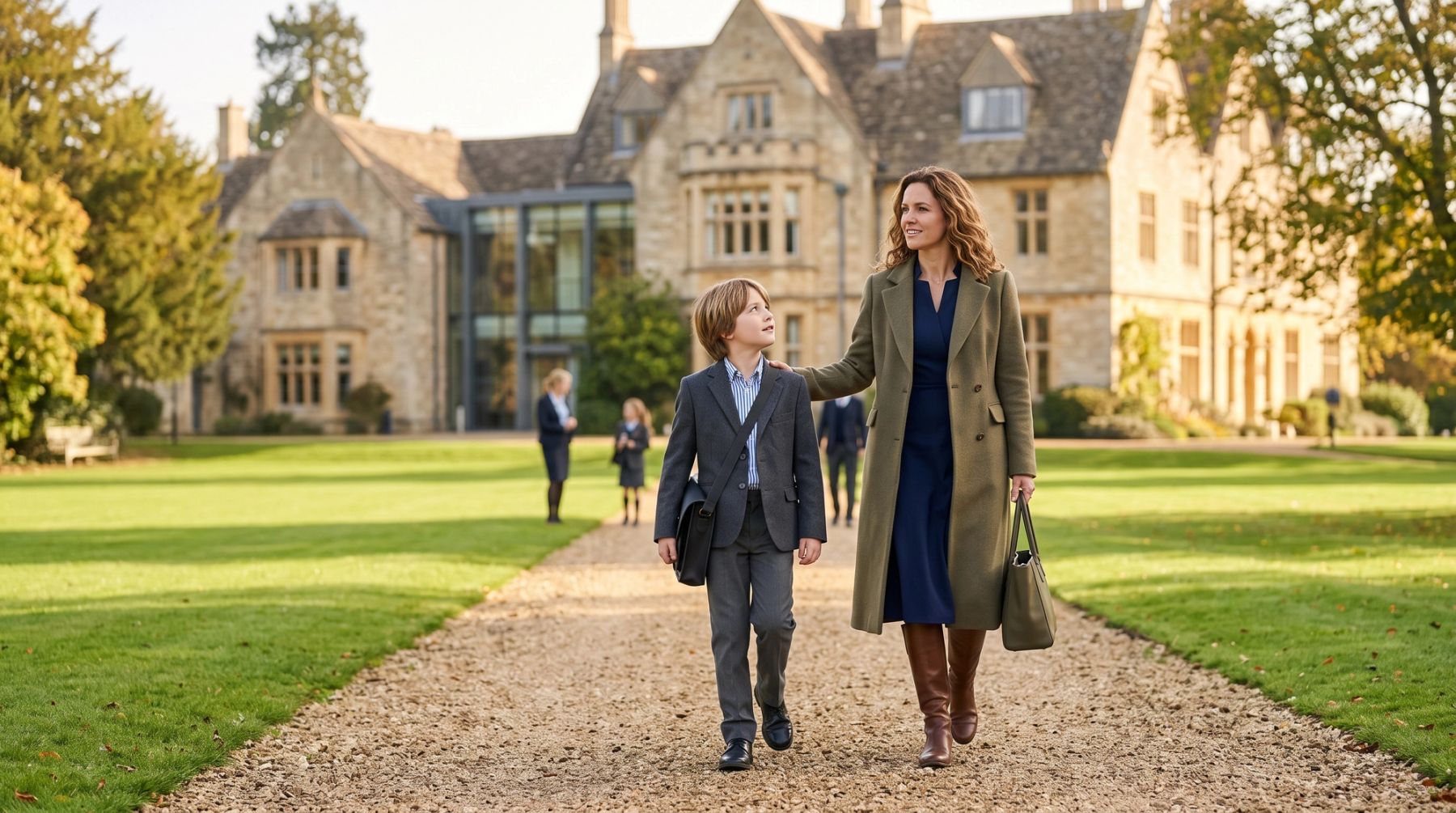
The UK private school admissions process typically involves 10 steps: choose the right schools, register interest, visit, sit entrance assessments, attend interviews, receive offers, accept a place, complete formalities, and prepare for entry. The process usually begins 12 to 24 months before entry, and longer for the most competitive schools. The single biggest determinant of success is not any specific step — it is building the right shortlist of schools matched to the child's genuine level.
Overview of the process
At a glance, the UK private school admissions journey looks like this:
- Build the right shortlist — the most important step.
- Register with each school.
- Visit the schools.
- Prepare for entrance assessments.
- Sit entrance assessments.
- Attend interviews.
- Receive offers (or waiting-list placings).
- Accept a place and pay a deposit.
- Complete registration paperwork.
- Prepare for entry.
The full journey is usually 12 to 24 months from research to arrival, and longer for highly competitive schools. Our full guide to when to start looking for a private school covers the timing in more detail.
Step 1: Build the right shortlist
This is the most important step — and the one families most often under-invest in. A well-constructed shortlist should:
- Reflect the child's genuine academic level.
- Match their specific strengths and interests.
- Include a range of competitiveness — aspirational, target, safety.
- Fit family circumstances — location, budget, boarding preference.
Aim for 3-5 schools spread across:
- 1-2 aspirational schools — likely more selective than a comfortable fit.
- 2-3 target schools — where your child is a strong match.
- 1 safety school — where admission is likely and the school would still be a good outcome.
Our full guides to how to choose the right private school and how competitive UK private school admissions are cover shortlist strategy in depth. Getting this right affects everything else.
Step 2: Register with each school
Registration formally enters your child into the admissions process. It typically involves:
- Completing a registration form — online at most schools.
- Providing basic details about the child and family.
- Paying a registration fee (usually £100-£300 per school).
- Sometimes providing an initial reference or school report.
Deadlines vary. Some schools register pupils up to five years in advance; others take applications closer to entry. Check each school's specific deadlines. Highly selective schools tend to have earlier and stricter deadlines.
Step 3: Visit the schools
Visiting matters more than most parents realise. It is where reputations meet reality. Aim for:
- An initial open day for the schools on your longlist.
- A private visit at the schools you shortlist — ideally on an ordinary school day.
- If a serious contender, a follow-up visit — perhaps sitting in on a lesson or spending time in a boarding house.
Our full guides to what to look for on a school open day and what questions to ask when choosing a private school cover how to make visits count.
Step 4: Prepare for entrance assessments
Preparation typically covers:
- Core curriculum mastery in English, maths, and reasoning.
- Wider reading and writing practice.
- Familiarity with the specific exam format each school uses.
- Practice with past papers where available.
- Interview practice.
Preparation ideally starts 12-18 months before the exam. Excessive early preparation can be counter-productive — the goal is building confidence and genuine ability, not exhausting the child. Our full guides to the 11+ and 13+ entrance exams and the ISEB Common Pre-Test cover exam-specific preparation.
Step 5: Sit entrance assessments
Most UK private schools use a combination of:
- The ISEB Common Pre-Test — a standardised computer-based test used at 11+ and pre-13+ by many schools.
- School-specific papers in English, maths and reasoning.
- Subject-specific papers, particularly at 13+ and 16+.
- UKiset for international applicants.
- Standardised tests such as GL Assessment or CEM.
Exam format matters — verbal reasoning, non-verbal reasoning, and school-specific styles all require slightly different preparation. Ask each school specifically what they use.
Step 6: Attend interviews
Interviews are almost universal at private-school admissions above the earliest stages. Schools use them to assess:
- Communication and confidence.
- Genuine curiosity and interest.
- Character and resilience.
- Fit with the school's community.
- Motivation for that specific school.
At competitive schools, interviews often decide between candidates with similar academic results. Our full guide to UK private school interviews covers what to expect and how to prepare.
Step 7: Offers and outcomes
After assessments and interviews, schools typically respond with one of the following:
- An offer of a place.
- A place on the waiting list.
- A rejection.
- For scholarships, a separate scholarship offer alongside the main place.
Offers usually have deadlines — often 2-6 weeks to accept. Waiting lists sometimes move significantly through spring and summer, so being placed on one is not the same as being rejected. Our full guides to private school waiting lists and what to do if your child is not offered a place cover these scenarios.
Step 8: Accept a place and pay a deposit
To secure a place, you typically:
- Sign an acceptance form.
- Pay a deposit — usually one term's fees or a fixed amount (£3,000-£10,000 depending on the school).
- Confirm any conditions of the offer are met.
- Withdraw applications at other schools if accepting definitively.
Deposits are usually credited against future fees but may be forfeited if the pupil does not take up the place. Read the terms carefully.
Step 9: Complete registration paperwork
Between offer acceptance and starting, schools typically require:
- Full pupil profile forms.
- Medical and consent forms.
- Reference from the current school head.
- Photographs and identification.
- For international pupils: guardianship confirmation, visa documentation. Our full guides to guardianship for international students and visas for UK boarding school students cover this stage.
Step 10: Prepare for entry
In the months before starting:
- Order uniform and required kit.
- Attend induction days if offered.
- Arrange practical logistics — transport, dining preferences, house arrangements.
- For boarders — begin preparation for independence. See our full guide to preparing a child for boarding school.
- For younger transitions — visit the school informally to build familiarity.
Typical timeline in detail
| Time before entry | Action |
|---|---|
| 24+ months | Research schools, identify shortlist. |
| 18-24 months | Register with schools. Attend open days. |
| 12-18 months | Private school visits. Begin structured preparation. |
| 6-12 months | Entrance exams. Interviews. |
| 3-6 months | Offers received. Accept and pay deposit. |
| 0-3 months | Complete paperwork. Uniform. Induction. Preparation for entry. |
Highly selective schools may require earlier registration — sometimes at ages as young as 3 or 4 for certain London schools. Ask specifically for each school on your shortlist.
The most common mistakes
- Applying only to the most selective schools — high rejection risk with no fallback.
- Choosing on reputation rather than fit — the biggest single cause of long-term unhappiness.
- Leaving applications too late — most selective schools have strict deadlines.
- Under-preparing for the specific exam format each school uses.
- Ignoring interviews as a key differentiator.
- Not investigating scholarship and bursary options — talented pupils are often more welcome than families realise.
- Focusing on headline exam results without looking at fair-comparison measures like the top 25 per cent of results.
Our full guide to why the top 25 per cent of results matter more than the average covers the last point in depth.
Special situations
Applying from state school
Moving from state to private is common at 11+, 13+ or 16+. Prep for the specific exam format, and be honest with the school about the current school context — most are experienced at assessing state-school candidates fairly.
Applying from overseas
International applicants follow largely the same process, with additional requirements around English proficiency, visas and guardianship. Our full guide to applying to UK private schools from overseas covers this in depth.
Mid-year entry
Some schools admit pupils mid-year for family relocation, dissatisfaction with current school, or specific circumstances. Availability is case by case. Contact schools directly to ask about current vacancies.
Transferring between private schools
Movement between private schools is common at 11+, 13+ and 16+, and occasional at other points. Be honest with the new school about the reason for moving, and provide a full reference from the current school.
Managing the emotional side
The admissions process is stressful for children and parents. Some practical guidance:
- Keep the process framed positively for the child.
- Avoid over-preparing to the point of exhaustion.
- Balance ambition with a realistic view of your child's level.
- Prepare for the possibility of rejection at competitive schools — it is common and not a reflection on the child.
- Have a genuine safety school so that a good outcome is guaranteed, not just possible.
Final thought
The UK private school admissions process is structured, manageable and well-trodden — but only when families approach it strategically. The most important element is not any specific step but the shortlist itself. Choose the right schools, prepare properly, visit them well, and treat the process as a serious but manageable project. Do that, and the outcome is usually good — often at a school different from the one you originally targeted.
My Top Schools helps parents find the right school for their child — with clear profiles, honest information, and search filters built around what really matters. Start your search.
Related reading
- When should I start looking for a private school? — The timing question in detail.
- The 11+ and 13+ entrance exams explained — The main entry-point exams.
- Moving from prep school to senior school — The prep-to-senior transition.
- Sixth form transition: staying or moving at 16? — The 16+ decision.
- UK private school interviews: what to expect — The interview process.
- ISEB Common Pre-Test explained — The main standardised admissions test.